Electrochemical series ideas (as required) - Chemistry IGCSE Study Notes
Overview
Have you ever wondered why some metals rust easily, while others stay shiny for ages? Or why batteries work? It all comes down to how 'eager' different metals are to react and give away their tiny electrical particles called **electrons**. This 'eagerness' is what the **Electrochemical Series** helps us understand. Imagine a popularity contest for metals, but instead of who's most liked, it's about who's most reactive! This series is super important because it helps us predict what will happen when different metals meet, like which one will 'win' in a chemical reaction or how to stop metals from rusting. Understanding this series is like having a superpower to predict chemical reactions involving metals. It's not just for chemists; it's used in everyday life, from protecting bridges to making your phone battery work!
What Is This? (The Simple Version)
Think of the Electrochemical Series (also called the Reactivity Series) like a ladder for metals. At the very top are the 'super-eager' metals, who are desperate to give away their electrons (the tiny negative parts of an atom that move around). At the bottom are the 'super-lazy' metals, who prefer to hold onto their electrons and not react much.
So, what does 'giving away electrons' mean? It means they are very reactive. When a metal gives away electrons, it becomes a positive ion (an atom with a charge because it's lost electrons). The higher a metal is on this ladder, the more easily it gives away electrons and the more reactive it is.
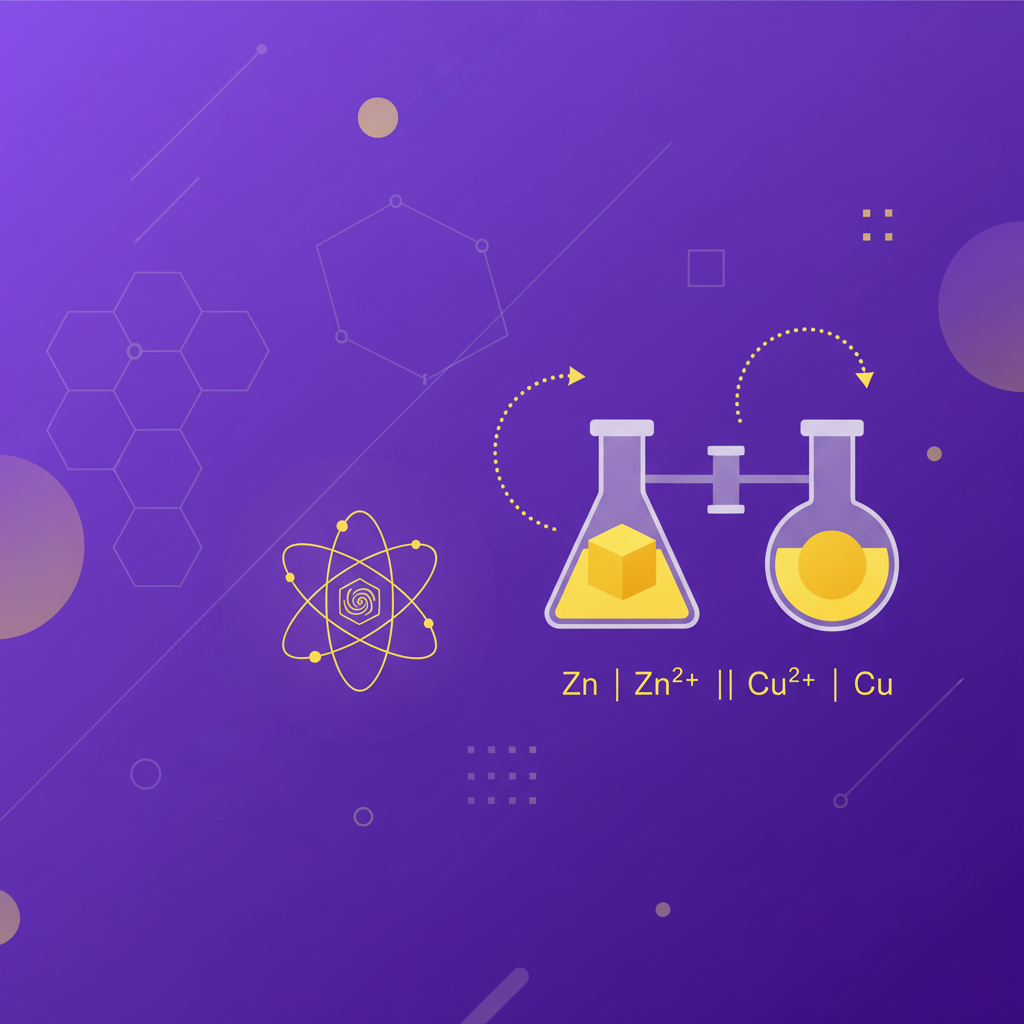
This ladder helps us predict which metal will 'push out' another metal from a compound. It's like a game of musical chairs: the more reactive metal (the one higher on the ladder) will always try to take the place of a less reactive metal (the one lower on the ladder) in a compound. For example, if you put a highly reactive metal like zinc into a solution containing a less reactive metal like copper, the zinc will 'kick out' the copper and take its place!
Real-World Example
Let's talk about rusting, which is when iron reacts with oxygen and water to form iron oxide (rust). This is a big problem for things like cars, bridges, and ships. How do we stop it?
One clever way is called sacrificial protection. Imagine you have a valuable treasure chest (made of iron) that you want to protect from pirates (rust). You could put a less valuable, but super-brave, guard (a more reactive metal like magnesium or zinc) right in front of it.
Here's how it works:
- You attach a piece of a more reactive metal (like zinc) to the iron object you want to protect.
- Because zinc is higher up on the Electrochemical Series (more reactive) than iron, the zinc will react with the oxygen and water first, 'sacrificing' itself.
- The zinc gives away its electrons instead of the iron, preventing the iron from rusting.
- The zinc slowly gets used up, but your iron object stays safe! This is why you often see blocks of zinc attached to the hulls of ships.
How It Works (Step by Step)
Let's break down how to use the Electrochemical Series to predict reactions: 1. **Identify the metals involved:** Look at the metals taking part in the reaction you're studying. 2. **Locate them on the series:** Find where each metal sits on the Electrochemical Series (your 'reactivity ladder'). 3...
Unlock 3 More Sections
Sign up free to access the complete notes, key concepts, and exam tips for this topic.
No credit card required · Free forever
Key Concepts
- Electrochemical Series: A list of metals (and hydrogen) arranged in order of their reactivity, from most reactive to least reactive.
- Reactivity: How easily a metal loses electrons to form positive ions and undergo chemical reactions.
- Electrons: Tiny negatively charged particles that orbit the nucleus of an atom and are involved in chemical bonding and reactions.
- Displacement Reaction: A reaction where a more reactive metal 'kicks out' (replaces) a less reactive metal from its compound.
- +5 more (sign up to view)
Exam Tips
- →Memorise the order of common metals in the Electrochemical Series (e.g., Potassium, Sodium, Calcium, Magnesium, Aluminium, Zinc, Iron, Lead, Hydrogen, Copper, Silver, Gold).
- →Practice predicting displacement reactions: if Metal A is above Metal B, Metal A will displace Metal B from its salt solution.
- +3 more tips (sign up)
More Chemistry Notes